Can a UV Sticker Tell You When to Reapply Sunscreen?
Learn what a UV-reactive sticker can and cannot tell you, when to reapply sunscreen, and how to use SOLCHECK with the UV Index, a timer, and your SPF label.
Contents
- What does a color-changing UV sticker measure?
- Three different signals should guide reapplication
- Can a UV sticker tell you exactly when to reapply sunscreen?
- What does the research say about UV stickers?
- How to use SOLCHECK as part of a sun-protection routine
- 1. Check the forecast before you leave
- 2. Apply sunscreen according to its label
- 3. Apply and read the sticker according to its package instructions
- 4. Set a timer anyway
- 5. Let the color trigger a routine check
- A sticker and a UV Index app do different jobs
- When should you reapply even if the sticker looks light?
- What SOLCHECK can—and cannot—promise
- FAQ
- Does a UV sticker measure the sunscreen on my skin?
- Should I wait for the sticker to change color before reapplying?
- Can a UV sticker replace a UV Index app?
- Does a darker sticker mean I am about to sunburn?
- Can I skip sunscreen if the UV sticker stays light?
- The bottom line
What a UV Sticker can and can't tell you
A UV-reactive sticker can be a useful reminder to check your sun-protection routine, but it cannot confirm that the sunscreen on every part of your skin has stopped working. Treat the color as a cue about the UV around you, then keep following the sunscreen label: reapply at least every two hours outdoors and more often after swimming or sweating, as the FDA advises. For water-resistant sunscreens, FDA labeling guidance also directs reapplication immediately after towel drying.
HAESKN makes SOLCHECK, so we want to be precise about that boundary. A visible reminder may help you notice changing conditions. It does not replace sunscreen, protective clothing, shade, a timer, or the directions on your SPF.
What does a color-changing UV sticker measure?
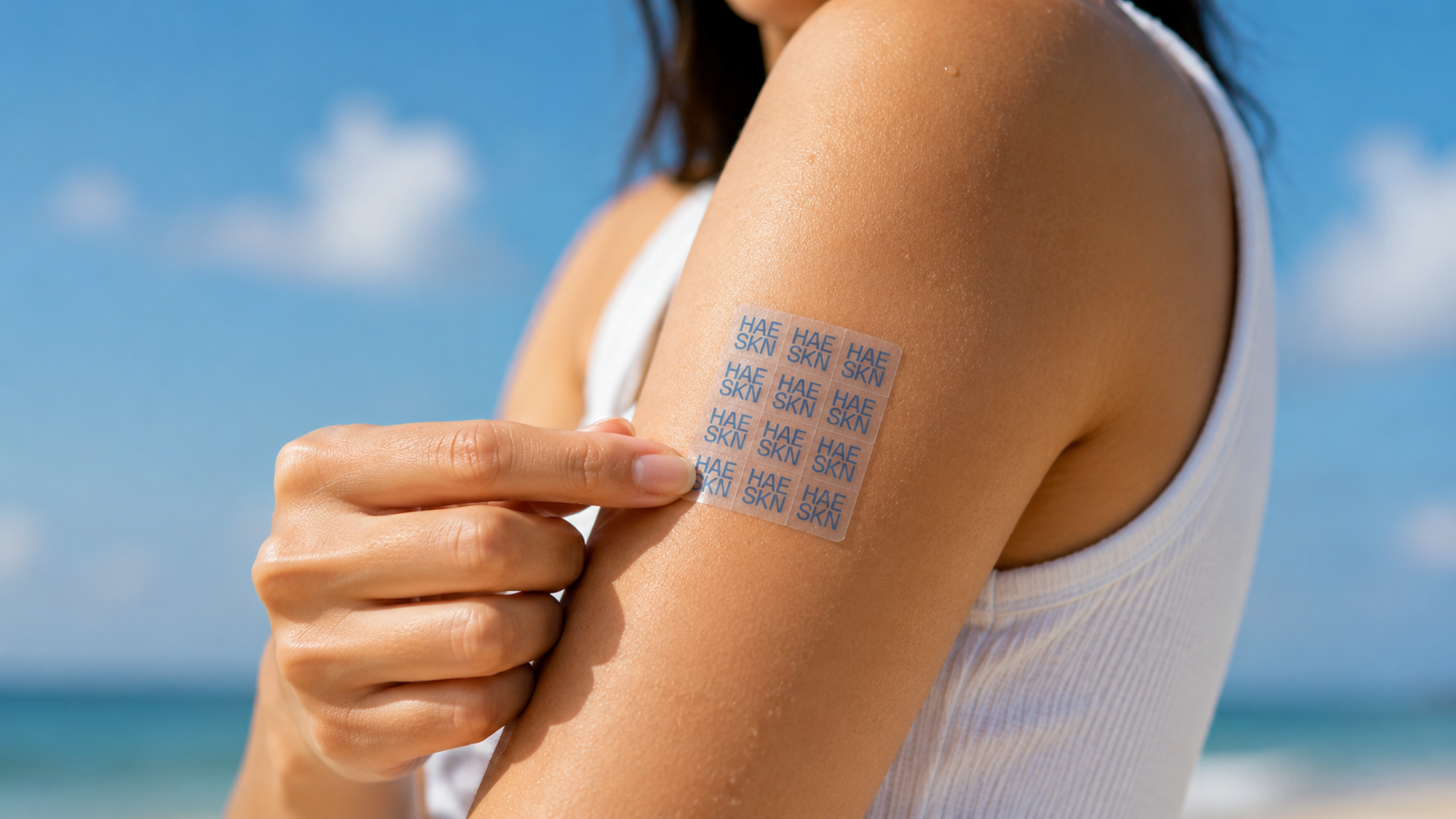
A color-changing UV sticker responds to ultraviolet radiation reaching the sticker itself. The HAESKN SOLCHECK product page describes the logo as getting darker as UV becomes stronger. That makes an invisible environmental condition visible at a glance.
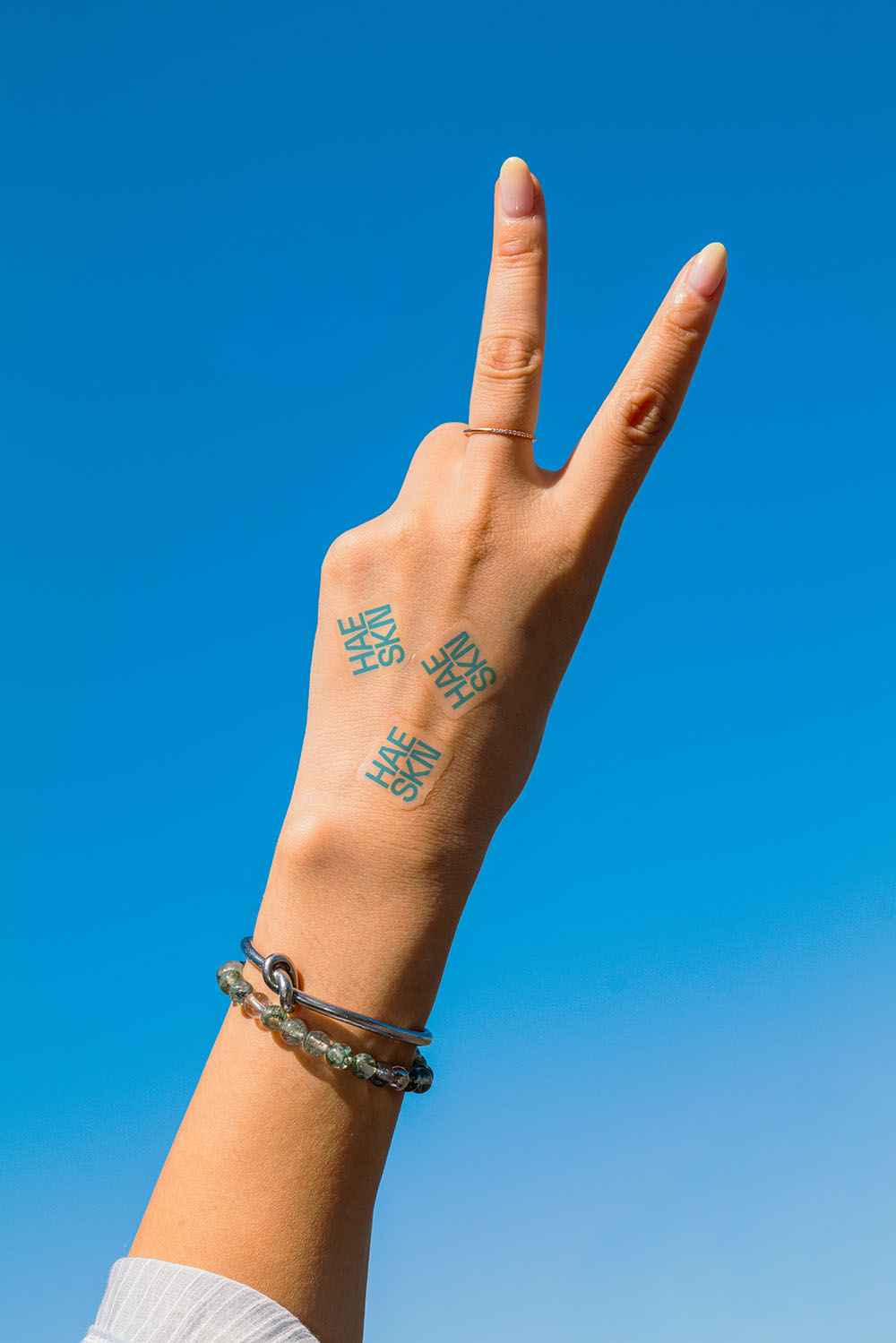
That is different from measuring how much sunscreen remains on your face, shoulders, or legs. The sticker cannot see whether:
you applied enough sunscreen in the first place;
a backpack strap rubbed a patch away;
sweat moved the sunscreen film;
you missed your ears or hairline;
a towel removed protection; or
the product on one body area is wearing differently from another.
The practical interpretation is simple: a darker sticker can remind you that UV is present or increasing, but a lighter sticker is not permission to ignore the clock or the label.
Three different signals should guide reapplication
People often ask one tool to answer three separate questions. No single sticker, app, or timer answers all of them.
Signal | What it tells you | What it does not tell you | Best use |
|---|---|---|---|
UV-reactive sticker | UV conditions at the sticker's position | Whether sunscreen coverage is complete or intact | A visible, in-the-moment awareness cue |
Weather app or UV Index forecast | Expected UV intensity for an area and time | Exactly what reaches one body position throughout the day | Planning clothing, shade, timing, and SPF before leaving |
Sunscreen label, timer, and activity | When the tested reapplication limit or routine has been reached | The precise UV intensity around you | Deciding when reapplication is due |
The World Health Organization defines the UV Index as a measure of UV radiation intensity and recommends protective measures when the Index reaches 3 or higher. A sticker can make changing UV more noticeable, but the official UV Index remains the better planning tool because it gives a standardized scale and forecast.
For a full breakdown of that scale, see How to Read the UV Index.
Can a UV sticker tell you exactly when to reapply sunscreen?
Not by itself. The safest reapplication decision combines a fixed schedule with event-based triggers.
Use the earlier of these triggers:
Two hours outdoors have passed. The FDA recommends reapplying at least every two hours.
You reached the label's water-resistance limit. In the United States, a water-resistant sunscreen label specifies either 40 or 80 minutes of swimming or sweating under the applicable test (FDA sunscreen labeling guidance).
You towel-dried or wiped the area. The same FDA guidance calls for immediate reapplication after towel drying.
Coverage was disturbed. Reapply after heavy friction from clothing, straps, gear, or repeated face wiping.
The sticker makes rising UV hard to ignore. Use that visual change as a prompt to check the four rules above—not as a new, longer deadline.
This distinction matters because the sticker observes the environment while the sunscreen label governs the product. Our guide to 40- and 80-minute water-resistance labels explains why those numbers do not mean “protected all day.”
What does the research say about UV stickers?
The evidence is promising for reminders, but it does not show that a sticker can guarantee protection.
In a 2019 field study at an outdoor cricket event, researchers enrolled 813 spectators and received complete follow-up data from 428. Among those respondents, 80% of people given a UV-detection sticker reported reapplying sunscreen, compared with 68% in the control group. The sticker group did not report fewer sunburns, and the unequal groups, self-reported outcomes, and incomplete follow-up limit how broadly the result can be applied. The study's careful conclusion was that stickers may improve reapplication in a high-UV environment—not that they prevent sunburn on their own (Preventive Medicine study via PubMed).
That is the right level of confidence for everyday use. A sticker may interrupt forgetfulness. It cannot correct under-application, cover missed skin, or prove that the sunscreen film is still even.
Research on other wearable UV devices also argues against overconfidence. In a randomized trial involving melanoma survivors, access to a UV-sensing wearable and exposure alerts did not produce meaningful improvements in measured UV exposure, sun-protection behavior, or sunburn compared with the control experience (trial report in PubMed Central). That device is not the same as SOLCHECK, but the broader lesson applies: seeing UV information only helps when it leads to the right action.
How to use SOLCHECK as part of a sun-protection routine
HAESKN announced SOLCHECK as a color-coded UV-awareness tool for active, everyday routines. The conservative way to use it is as one layer in a larger system.
1. Check the forecast before you leave
Look at the day's UV Index, not only temperature or cloud cover. Use the forecast to decide whether to change the timing of your activity, seek shade, or add a hat, sunglasses, and covering clothing. The WHO recommends combining these measures rather than relying on sunscreen alone.
2. Apply sunscreen according to its label
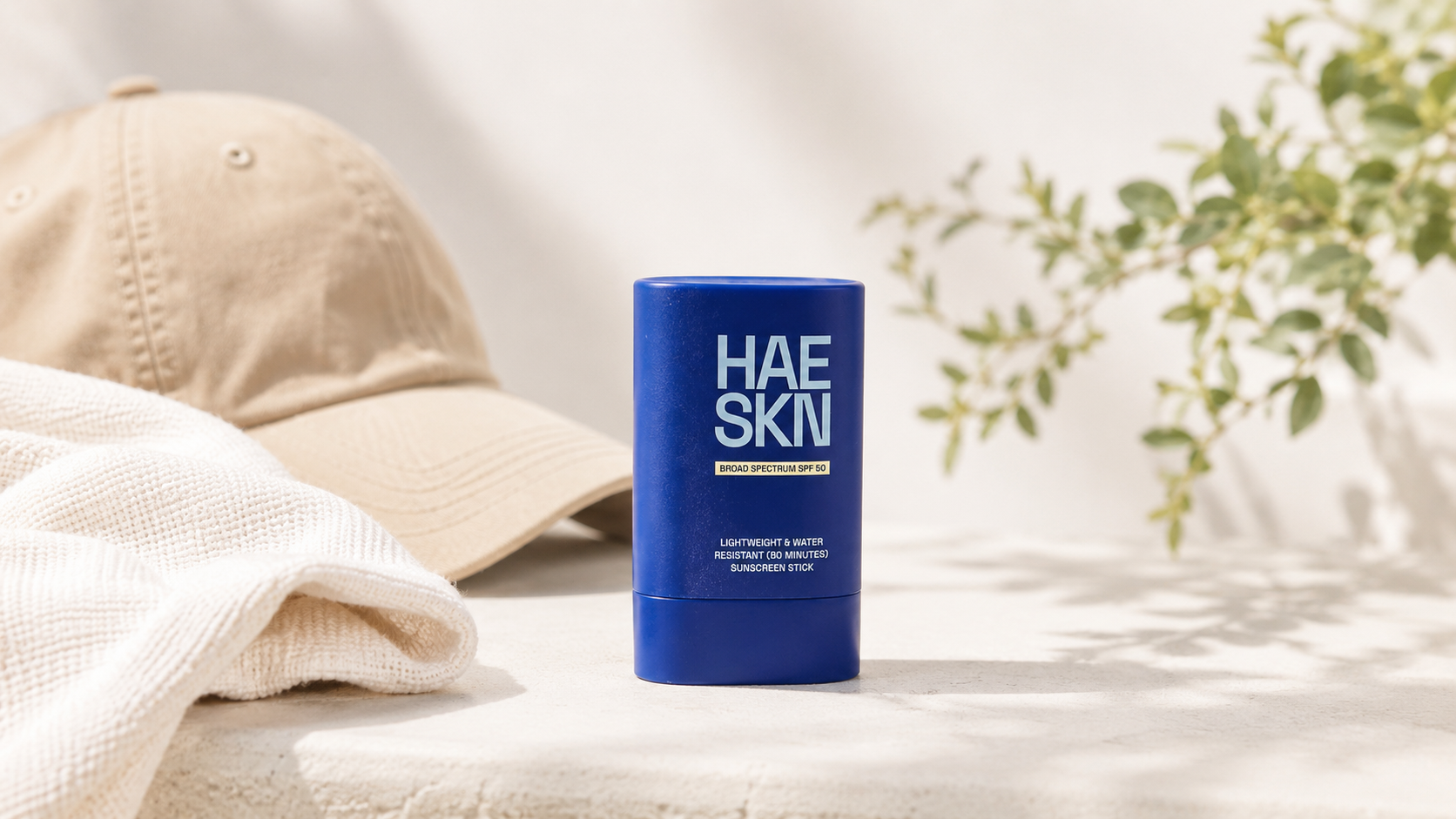
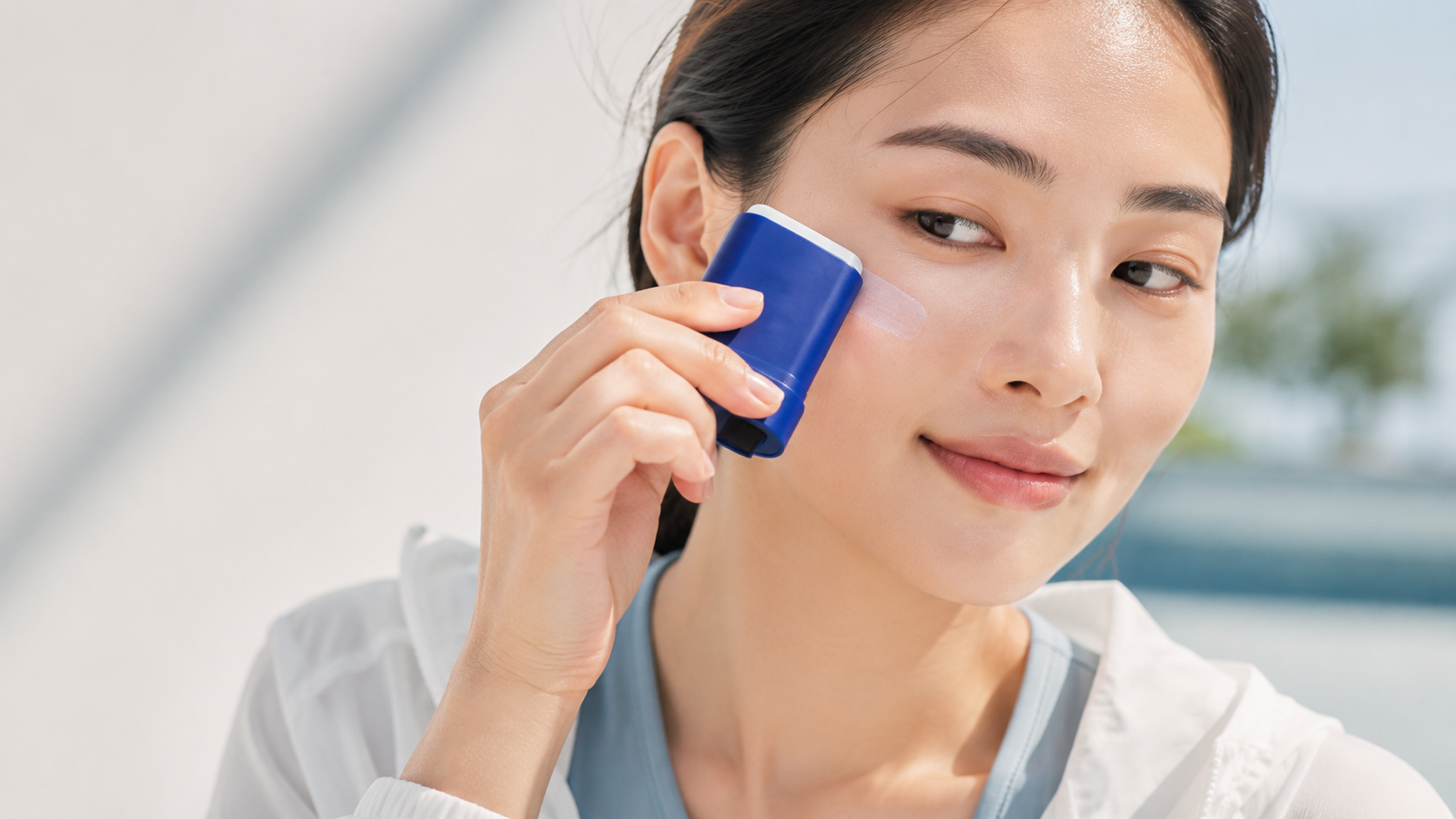
A sticker does not compensate for a thin or incomplete first layer. Apply sunscreen to all exposed skin before sun exposure as directed. If you use a stick format, make enough overlapping passes to build even coverage; one quick swipe is easy to under-apply.
3. Apply and read the sticker according to its package instructions
Follow the package instructions for placement and use. Read the color in the context provided by the product, and remember that it represents conditions at the sticker—not every body area.
4. Set a timer anyway
Start a two-hour reminder when you begin outdoor exposure. If you swim, sweat heavily, towel off, or disturb the sunscreen film before the alarm, reapply sooner. A timer catches the quiet failure mode: UV may feel ordinary while the protection schedule has already expired.
5. Let the color trigger a routine check
When SOLCHECK darkens, ask:
How long have I been outside?
Have I been swimming or sweating?
Did I wipe my face or towel off?
Are my hat, sleeves, and shade plan still adequate?
Did I miss any exposed areas?
The action may be reapplying sunscreen. It may also be moving to shade, adding clothing, or ending midday exposure. The sticker is most useful when it prompts the full checklist instead of a single product response.
A sticker and a UV Index app do different jobs
A weather app helps you plan; a wearable cue helps you notice.
The official UV Index is standardized and designed to communicate the potential for UV harm across a location and time period. It can tell you that the afternoon is expected to move from moderate to very high exposure. It cannot see whether you stepped into shade, covered your arms, or wiped off your sunscreen.
A sticker travels with you and can make the presence of UV visually salient. Because it responds to UV reaching its own position, interpret its color in the context of placement, orientation, shade, clothing, and the product's own design. It should not be treated as a calibrated medical instrument or an exact replacement for an official UV Index reading unless the manufacturer provides evidence for that use.
Use both:
UV Index forecast: plan the day.
UV sticker: notice the environment.
Label plus timer: manage sunscreen reapplication.
Sweat, water, towels, and friction: trigger earlier action.
When should you reapply even if the sticker looks light?
Reapply when the label or your activity says it is time, regardless of the sticker color.
Common examples include:
you have been outdoors for two hours;
you finished swimming or reached the product's water-resistance interval;
you towel-dried after the pool;
you wiped sweat repeatedly during a run;
a helmet strap, collar, or backpack rubbed exposed skin; or
the sticker was shaded while other skin remained exposed.
A low-looking signal at one small patch cannot certify the sunscreen layer everywhere else. When the cues disagree, follow the more protective instruction.
What SOLCHECK can—and cannot—promise
SOLCHECK's useful role is straightforward: HAESKN designed it to make changing UV conditions visible and to reinforce sun-protection habits. That is an educational and behavioral function.
SOLCHECK should not be interpreted as proof that:
your sunscreen has reached its labeled SPF;
the sunscreen film is still complete;
every exposed body area received the same UV dose;
it is safe to extend time in the sun;
sunburn will be prevented; or
other sun-protection measures are unnecessary.
That honest limitation does not make a reminder useless. Most routines fail at the moment attention drifts. A visible cue can bring the decision back into view—as long as the decision still follows established guidance.
FAQ
Does a UV sticker measure the sunscreen on my skin?
No. A UV-reactive sticker responds to UV reaching the sticker. It does not inspect the thickness, coverage, or condition of sunscreen on other skin areas.
Should I wait for the sticker to change color before reapplying?
No. Reapply at least every two hours outdoors and sooner after swimming, sweating, towel drying, or friction, following your product label. The sticker is an additional reminder, not the start of the schedule.
Can a UV sticker replace a UV Index app?
No. An app provides a standardized forecast for planning, while a sticker offers a visual cue at its own position. They are complementary, not interchangeable.
Does a darker sticker mean I am about to sunburn?
Not necessarily. It indicates stronger UV response according to the sticker's design, but sunburn risk also depends on exposure time, skin characteristics, clothing, shade, sunscreen amount, and reapplication. Do not use color alone to estimate a personal “safe time.”
Can I skip sunscreen if the UV sticker stays light?
Do not use a sticker color to override official UV guidance or your sunscreen label. Check the UV Index, account for how long you have been outside, and use shade, clothing, a hat, sunglasses, and sunscreen together.
The bottom line
A UV sticker can answer, “Is UV around me noticeable enough to demand attention?” It cannot answer, “Is every inch of my sunscreen still protecting me?”
Use SOLCHECK as the visual cue. Use the UV Index to plan. Use your sunscreen label, a timer, and real-world events—sweat, swimming, towel drying, and friction—to decide when to reapply.
Frequently asked questions
What is the main takeaway from Can a UV Sticker Tell You When to Reapply Sunscreen??
Learn what a UV-reactive sticker can and cannot tell you, when to reapply sunscreen, and how to use SOLCHECK with the UV Index, a timer, and your SPF label.
Who should read Can a UV Sticker Tell You When to Reapply Sunscreen??
This article is written for HAESKN readers who want practical, source-backed guidance before making a decision or changing their routine.
When was Can a UV Sticker Tell You When to Reapply Sunscreen? last updated?
Can a UV Sticker Tell You When to Reapply Sunscreen? was last updated on 2026-07-23.