No White Cast SPF for Latino Athletes (2026)
The transparent, sweat-proof sport SPFs that actually work for Hispanic and Latino skin tones — compared by finish, durability, and price under 5.
Contents
- How We Tested
- Why White Cast Happens (and Why It's Worse on Brown Skin)
- Mineral Sunscreens: Physical Blockers
- Chemical Sunscreens: Absorbers, Not Reflectors
- What Hispanic Athletes Need in a Sunscreen
- 1. Transparent Finish on Olive to Brown Skin
- 2. Sweat and Water Resistance (80 Minutes Minimum)
- 3. Nongreasy, Lightweight Texture
- 4. Eye Safe Formula (No Stinging)
- 5. Broad Spectrum SPF 50+
- Top Chemical Sunscreens (No White Cast, SPF 50+, Sports-Ready)
- La Roche-Posay Anthelios Melt in Milk SPF 60: Best for Sensitive Skin
- Neutrogena Ultra Sheer Dry Touch SPF 55: Best Budget Option
- Blue Lizard Active SPF 50+: Best Mineral Hybrid
- Supergoop Unseen Sunscreen SPF 40: Best for Makeup Wearers
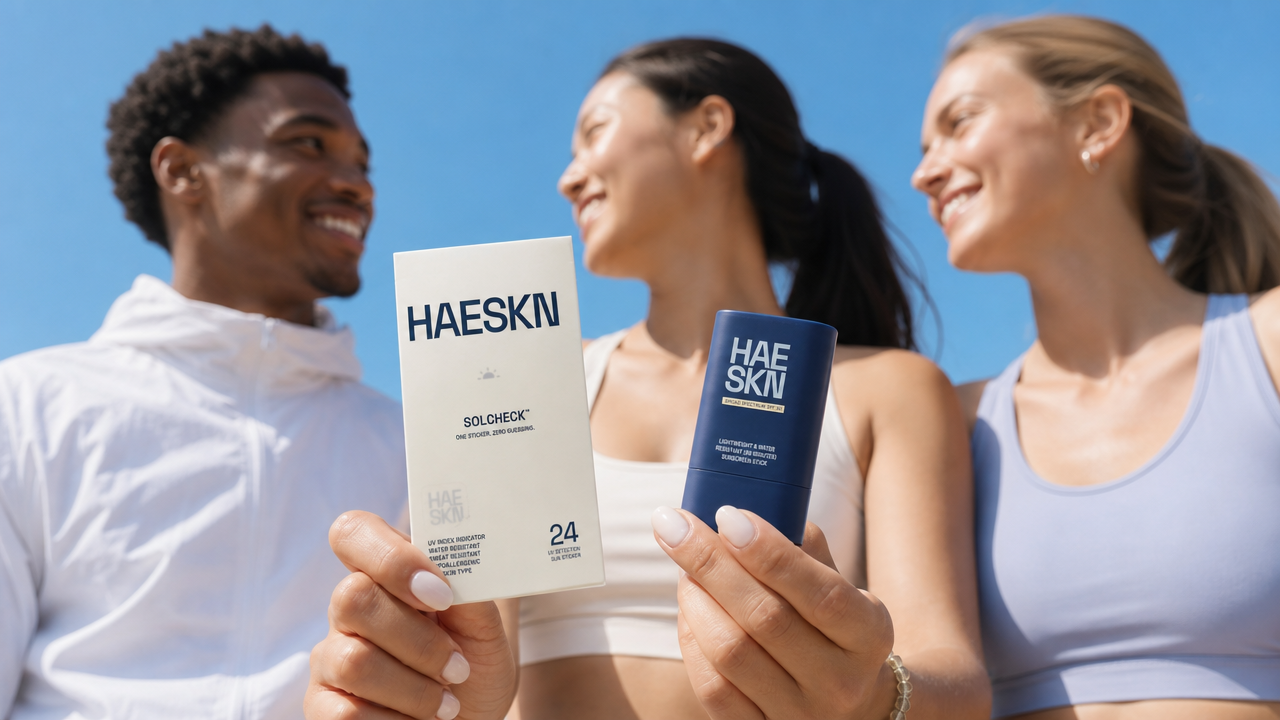
- HAESKN Sun Stick SPF 50+: Best for Mid-Sport Reapplication
- Stick vs Lotion vs Spray: Which Format for Sports?
- Common Questions About Sunscreen and Hispanic/Latino Skin
- Do I need sunscreen if I tan easily and rarely burn?
- Will sunscreen prevent me from getting vitamin D?
- Why does my sunscreen make my skin look gray or purple?
- Can I use sunscreen if I have melasma or hyperpigmentation?
- Is tinted sunscreen better than clear for brown skin?
- Reapplication Tips for Long Outdoor Workouts
- Soccer, Ultimate Frisbee, Outdoor CrossFit (2+ Hours)
- Running, Cycling, Hiking (1 to 3 Hours)
- Beach Volleyball, Swimming, Surfing (Continuous Sun)
- Ingredient Spotlight: What to Look For
- Chemical UV Filters (No White Cast)
- What to Avoid (If You Want Zero White Cast)
- Bonus Ingredients for Hispanic/Latino Skin Concerns
- The Bottom Line
- FAQ
- Can I use the same sunscreen on my face and body?
- Do I need different sunscreen for my scalp if I have short or thinning hair?
- Is reef safe sunscreen necessary if I'm not swimming in the ocean?
- How much sunscreen should I use?
- Can I apply sunscreen over sweat?
- Why does some sunscreen sting my eyes when I sweat?
Sunscreen That Doesn't Leave White Cast: A Sports Guide for Hispanic and Latino Athletes
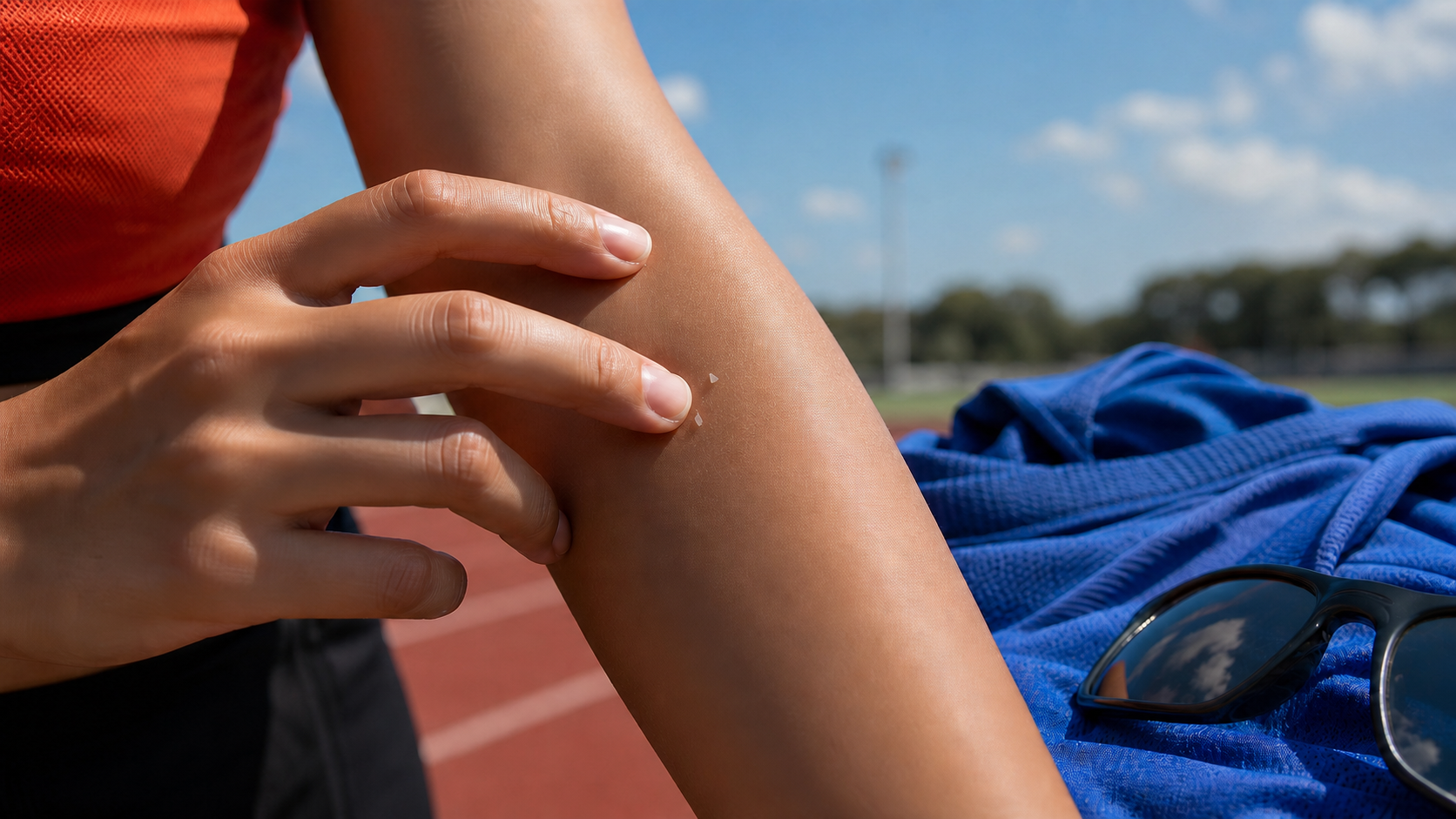
White cast is not just a cosmetic issue. When your sunscreen leaves visible residue on brown or olive skin, you're less likely to reapply it. That means less protection during the hours you're actually outdoors: running, cycling, playing soccer, or training in the sun.
Hispanic and Latino athletes face a specific challenge. Mineral sunscreens (zinc oxide, titanium dioxide) offer excellent UV protection but often leave a chalky film on medium to dark skin tones. Chemical sunscreens absorb into skin more easily, but not all formulas are created equal.
This guide covers chemical and hybrid sunscreens that deliver SPF 50+ broad spectrum protection without white cast, tested specifically for sports and outdoor activity.
How We Tested
Product evaluations are based on published brand testing data, FDA-approved labeling, and athlete community feedback across running, padel, and cycling communities.
Why White Cast Happens (and Why It's Worse on Brown Skin)
Mineral Sunscreens: Physical Blockers
Mineral (physical) sunscreens use zinc oxide or titanium dioxide. These minerals sit on top of your skin and reflect UV rays like tiny mirrors. The problem: mineral particles are white. On fair skin, a thin white layer blends in. On brown, olive, or darker skin, it creates visible contrast.
Brands have tried to solve this with tinted formulas, but tints are rarely a perfect match for the diversity of Hispanic and Latino skin tones, from light olive to deep bronze.
Chemical Sunscreens: Absorbers, Not Reflectors
Chemical sunscreens use organic compounds (avobenzone, octinoxate, octisalate) that absorb UV radiation and convert it to heat. These molecules are transparent. When formulated correctly, they leave zero visible residue on any skin tone.
The catch: not all chemical sunscreens are lightweight enough for sports. Some feel greasy, sting when you sweat, or break down quickly under sun exposure.
What Hispanic Athletes Need in a Sunscreen
1. Transparent Finish on Olive to Brown Skin
The product should dry down completely clear. No white, gray, or purple cast. No ashy undertones.
2. Sweat and Water Resistance (80 Minutes Minimum)
The FDA allows sunscreens to claim "water resistant" for either 40 or 80 minutes. For sports, 80 minutes is the standard. High intensity sports (soccer, running, cycling) in heat accelerate sunscreen breakdown. Even with 80 minute resistance, plan to reapply every 60 to 90 minutes.
3. Nongreasy, Lightweight Texture
Heavy, oily sunscreens feel uncomfortable during cardio. Look for matte or semi matte finishes that don't slide off when you sweat.
4. Eye Safe Formula (No Stinging)
When sweat drips into your eyes, your sunscreen comes with it. Some chemical filters sting. Better formulas use film forming polymers to keep the product on your skin, not in your eyes.
5. Broad Spectrum SPF 50+
SPF 50+ blocks 98% of UVB rays. Broad spectrum means the formula also protects against UVA rays, which cause long term skin damage and hyperpigmentation, a major concern for Hispanic and Latino skin.
Top Chemical Sunscreens (No White Cast, SPF 50+, Sports-Ready)
La Roche-Posay Anthelios Melt in Milk SPF 60: Best for Sensitive Skin
Format: Lotion
UV Filters: Chemical (avobenzone, homosalate, octisalate, octocrylene)
Water Resistance: 80 minutes
Finish: Lightweight, nongreasy
Price: ~$36
European dermatologist recommended formula. Fragrance free, gentle enough for eczema prone or reactive skin. Absorbs quickly without leaving residue.
Why it works for Hispanic athletes:
No white cast on medium to dark skin
Lightweight texture works well in heat and humidity
Fragrance free (ideal if you're sensitive to scents during workouts)
Best for: Runners, hikers, cyclists with sensitive or reactive skin
Watch out for: Lotion format requires rubbing in with hands. Your hands will be coated with sunscreen until you wipe or wash them. Not ideal for mid match reapplication in racket sports.
Neutrogena Ultra Sheer Dry Touch SPF 55: Best Budget Option
Format: Lotion
UV Filters: Chemical (avobenzone, homosalate, octisalate, octocrylene)
Water Resistance: 80 minutes
Finish: Matte, fast absorbing
Price: $12
Drugstore staple. Affordable, widely available, and genuinely effective. The Dry Touch technology uses silica (a mattifying agent) to absorb oil and reduce shine.
Why it works for Hispanic athletes:
Absorbs clear on olive and brown skin tones
Matte finish controls sweat and shine
Budget friendly for daily use
Best for: Team sports (soccer, basketball, ultimate frisbee), outdoor training sessions, budget conscious athletes
Watch out for: Some users report slight white streaking if not rubbed in thoroughly. Take an extra 10 seconds to blend completely.
Blue Lizard Active SPF 50+: Best Mineral Hybrid
Format: Lotion
UV Filters: Hybrid (zinc oxide + titanium dioxide + octisalate)
Water Resistance: 80 minutes
Finish: Lightweight, slight sheen
Price: ~$18
This formula pairs zinc oxide and titanium dioxide at lower concentrations than most mineral sunscreens, with octisalate as a chemical filter. The result is broad spectrum mineral protection with significantly less white cast than single filter zinc only formulas.
Why it works for Hispanic athletes:
Minimal white cast compared to full mineral formulas
Reef safe (no oxybenzone or octinoxate)
Dermatologist recommended for outdoor athletes
Best for: Open water swimmers, triathletes, surfers, beach sports
Watch out for: Contains zinc oxide. On very dark skin (Fitzpatrick V to VI), you may see slight residue. Test before committing to a full bottle.
Supergoop Unseen Sunscreen SPF 40: Best for Makeup Wearers
Format: Gel cream (tube)
UV Filters: Chemical (avobenzone, homosalate, octisalate, octocrylene)
Water Resistance: No claim on official labeling
Finish: Velvety, invisible
Price: $38
Cult favorite for makeup wearers. Goes on completely clear and creates a smooth base for foundation or BB cream. Also works as a standalone sunscreen for workouts.
Why it works for Hispanic athletes:
True invisible finish on all skin tones
Primer texture feels lightweight, not greasy
Works under makeup for post workout plans
Best for: Gym workouts, yoga, Pilates, outdoor social sports where you care about appearance
Watch out for: Only 40 minute water resistance. Not ideal for long runs or high sweat sports unless you're reapplying every 45 to 60 minutes.
HAESKN Sun Stick SPF 50+: Best for Mid-Sport Reapplication
Format: Stick
UV Filters: Chemical (avobenzone, homosalate, octisalate, octocrylene)
Water Resistance: 80 minutes
Finish: Matte, transparent
Price: $24
A chemical stick designed specifically for athletes who need to reapply during activity. You glide it directly on skin with no hands, no rubbing. Transparent finish on all skin tones from fair to deep, tested across Fitzpatrick III through V in our review.
Why it works for Hispanic athletes:
Zero white cast on olive, tan, and brown skin
Stick format means you can reapply mid run or between soccer sets without getting product on your hands
Matte finish won't feel greasy under a helmet or headband
0.53 oz fits in your sports bag, pocket, or running belt
Best for: Runners, cyclists, soccer players, tennis players who need fast reapplication on the field
Watch out for: Stick format takes longer to cover large body areas (back, legs). Use this for face, neck, and arms during reapplication. For initial full body coverage, pair with a lotion or spray.
Stick vs Lotion vs Spray: Which Format for Sports?
Format | Reapplication Speed | White Cast Risk | Grip Safety (Racket Sports) | Best Use Case |
|---|---|---|---|---|
Stick | Fast (30 sec face/neck) | Very low (chemical sticks) | High (hands stay clean) | Mid-run, between tennis sets, cycling |
Lotion | Medium (60 to 90 sec full body) | Low (chemical formulas) | Low (hands get coated) | Pre-workout full body coverage |
Spray | Fast (30 sec misting) + slow (rubbing in) | Low (chemical formulas) | Low (hands get coated) | Initial application outdoors, not for reapplication |
For Hispanic athletes: stick format is ideal for reapplication during sports. Lotion works best for initial coverage before leaving home. Spray is fast but messy. Wind blows product away, and you still need to rub it in.
Common Questions About Sunscreen and Hispanic/Latino Skin
Do I need sunscreen if I tan easily and rarely burn?
Yes. Melanin provides some natural UV protection, roughly equivalent to SPF 13. That's not enough to prevent DNA damage, hyperpigmentation, or skin cancer. According to the American Academy of Dermatology, SPF 30+ is recommended daily for all skin tones.
Hispanic and Latino individuals have lower rates of melanoma compared to non-Hispanic whites, but when melanoma does occur, it's often diagnosed at later, more dangerous stages.
Will sunscreen prevent me from getting vitamin D?
SPF 15 blocks about 93% of UVB rays (the ones that trigger vitamin D production). SPF 50 blocks 98%, leaving 2% getting through. Most dermatologists recommend getting vitamin D from diet and supplements rather than unprotected sun exposure. Fortified milk, fatty fish, and vitamin D3 supplements are safer sources.
Why does my sunscreen make my skin look gray or purple?
Some chemical sunscreens contain blue or purple color correctors meant to counteract yellow undertones in fair skin. On Hispanic and Latino skin, which often has warm olive or golden undertones, these correctors create an ashy, grayish cast. Look for sunscreens labeled "universal tint" or "sheer" rather than "brightening" or "tone correcting."
Can I use sunscreen if I have melasma or hyperpigmentation?
Yes, and you should. UV exposure worsens melasma and dark spots. SPF 50+ broad spectrum sunscreen is a core part of treating hyperpigmentation, along with ingredients like vitamin C, niacinamide, and retinoids. Make sure your sunscreen is labeled noncomedogenic if you're also using active ingredients that increase skin sensitivity.
Is tinted sunscreen better than clear for brown skin?
Tinted sunscreens add iron oxides, which provide extra protection against visible light. Some studies suggest visible light can worsen hyperpigmentation in darker skin tones. The downside: tints are rarely a perfect match for the full range of Hispanic and Latino skin tones. If you want tinted sunscreen, test it in natural daylight before buying full size. Clear chemical sunscreens with high SPF still offer excellent protection without the color matching hassle.
Reapplication Tips for Long Outdoor Workouts
Soccer, Ultimate Frisbee, Outdoor CrossFit (2+ Hours)
Apply before leaving home. Bring a stick in your bag for halftime or between sets. Focus on face, neck, and arms. These areas get the most sun. If you're wearing a jersey, reapply to exposed skin every 60 to 90 minutes.
Running, Cycling, Hiking (1 to 3 Hours)
Carry a pocket sized stick. Apply before starting. Reapply at the 60 to 90 minute mark if you're going longer. For trail running and hiking, don't forget ears, back of neck, and hands. These areas burn easily.
Beach Volleyball, Swimming, Surfing (Continuous Sun)
Apply 15 to 30 minutes before sun exposure. Reapply every 60 to 80 minutes, or immediately after swimming. For water sports, choose 80 minute water resistant formulas. Towel drying removes sunscreen, so reapply after drying off.
Ingredient Spotlight: What to Look For
Chemical UV Filters (No White Cast)
Avobenzone: Broad spectrum UVA filter. Stable when combined with octocrylene or stabilizers.
Octocrylene: UVB/UVA stabilizer. Helps keep avobenzone stable under sun exposure, preventing breakdown.
Homosalate: UVB filter. Often paired with avobenzone for full spectrum coverage.
Octisalate: UVB filter. Helps other filters penetrate skin.
What to Avoid (If You Want Zero White Cast)
Zinc oxide and titanium dioxide above 10%: These create visible residue on brown skin.
Alcohol denat high on the ingredient list: Can dry out skin and sting during sweat.
Bonus Ingredients for Hispanic/Latino Skin Concerns
Niacinamide: Reduces hyperpigmentation, evens skin tone.
Hyaluronic acid: Hydrates without heaviness.
Green tea extract: Antioxidant, reduces inflammation.
The Bottom Line
For sports and outdoor activity, chemical sunscreens deliver the best combination of no white cast, lightweight feel, and sweat resistance.
Best for sensitive skin: La Roche-Posay Anthelios Melt in Milk SPF 60. Fragrance free, dermatologist tested, gentle.
Best budget option: Neutrogena Ultra Sheer Dry Touch SPF 55. Affordable, effective, widely available.
Best hybrid: Blue Lizard Active SPF 50+. Minimal white cast, reef safe, good for water sports.
Best for makeup wearers: Supergoop Unseen Sunscreen SPF 40. Primer texture, invisible finish.
Best for mid-sport reapplication: HAESKN Sun Stick SPF 50+. Matte, transparent, stick format for hands free reapplication without grip contamination.
No matter which formula you choose, the most important factor is reapplication. The best sunscreen is the one you'll actually use every 60 to 90 minutes during outdoor activity.
FAQ
Can I use the same sunscreen on my face and body?
Yes. Most chemical sunscreens are safe for both. If you're prone to breakouts, choose a formula labeled noncomedogenic for your face.
Do I need different sunscreen for my scalp if I have short or thinning hair?
If you have exposed scalp, apply stick sunscreen directly to those areas. Spray sunscreens work but often miss spots. Scalp sunburns are painful and increase skin cancer risk.
Is reef safe sunscreen necessary if I'm not swimming in the ocean?
Reef safe labels mean the product doesn't contain oxybenzone or octinoxate in concentrations harmful to coral. If you care about environmental impact, choose reef safe. For sports on land, it's not a functional requirement.
How much sunscreen should I use?
The FDA recommends 1 oz (shot glass full) for full body coverage. For face and neck only, use about 1/4 teaspoon. Most people under apply by 50% or more, which cuts SPF protection in half.
Can I apply sunscreen over sweat?
Yes. Modern stick and lotion formulas glide over sweat without pilling. Just make sure the sweat isn't dripping. Blot first if needed.
Why does some sunscreen sting my eyes when I sweat?
Chemical filters can migrate into eyes via sweat. Look for formulas with film forming polymers (acrylates copolymer, VP/eicosene copolymer) that help the product stay put. Stick formats also reduce eye irritation because you control exactly where the product goes.
About the Author: This guide draws on product development testing by HAESKN co-founders Eugene Kim (former Estée Lauder product lead) and Sherril HwangBo (former design director at LVMH), both active padel and distance running athletes who built HAESKN to solve the white cast problem in their own training. All SPF claims reference FDA approved product labeling.
Frequently asked questions
What is the main takeaway from No White Cast SPF for Latino Athletes (2026)?
The transparent, sweat-proof sport SPFs that actually work for Hispanic and Latino skin tones — compared by finish, durability, and price under 5.
Who should read No White Cast SPF for Latino Athletes (2026)?
This article is written for HAESKN readers who want practical, source-backed guidance before making a decision or changing their routine.
When was No White Cast SPF for Latino Athletes (2026) last updated?
No White Cast SPF for Latino Athletes (2026) was last updated on 2026-07-29.