Sunscreens That Won't Sting Your Eyes While Running
Non-stinging SPF picks for runners who sweat into their face — what to look for in formula, how to apply, and which sticks pass the long-run test.
Contents
- What actually makes sunscreen sting your eyes while running?
- What to look for in a runner-friendly sunscreen
- 1. Broad-spectrum SPF 30 or higher, ideally SPF 50 for long outdoor sessions
- 2. Water resistance
- 3. Precise application
- 4. A finish that does not stay slippery
- 5. A format you will actually carry
- Best options for runners who hate stinging eyes
- Why HAESKN fits this query well
- The best way to apply sunscreen so it does not run into your eyes
- Before the run
- During the run
- Mistakes that make eye sting worse
- Applying body sunscreen like face sunscreen
- Waiting until you already feel the burn
- Rubbing sweat down your face
- Going too close to the eye margin
- A simple ranking for this exact use case
- Who this article is really for
- FAQ
- What type of sunscreen is least likely to sting your eyes while running?
- Should runners reapply sunscreen before the two-hour mark?
- Is mineral sunscreen always better for sensitive eyes?
- Can I put sunscreen on my eyelids before a run?
- What is the easiest way to reapply during a long run?
Best Sunscreens for Runners Who Hate Stinging Eyes
If sunscreen keeps sliding into your eyes on a run, the fix is usually not “skip SPF.” It is choosing a formula that stays put under sweat, applying it early enough to set, and reapplying with a format you can control. Dermatology guidance is clear that outdoor exercise still needs broad-spectrum SPF 30 or higher, and long runs often need reapplication before the two-hour mark when sweat and friction are in play Skin Cancer Foundation Cleveland Clinic Runner’s World.
For most runners, the sweet spot is a face-safe stick or sport formula you can swipe precisely around the orbital area instead of flooding your forehead with a slippery lotion. If you want the short answer: look for broad-spectrum SPF 50, water resistance, a finish that does not stay greasy, and a format that is easy to reapply at mile 6, at a stoplight, or at an aid station.
What actually makes sunscreen sting your eyes while running?
The burn usually comes from movement, not just ingredients. Sweat runs down from your hairline and forehead. Sunscreen that has not fully set can travel with it. Salt in sweat can also irritate the eye surface on its own, which is why runners often blame the sunscreen when the real issue is a mix of sweat, rubbing, and product migration Cleveland Clinic Cleveland Clinic.
A few patterns make eye sting more likely:
- applying right before you head out, before the film has time to set
- using too much slick product on the forehead or upper eyelids
- choosing a formula that stays oily under heat
- wiping sweat downward with the back of your hand or shirt sleeve
- forgetting that long runs need reapplication planning, not just pre-run coverage
That is why runners often do better with solid sticks, matte sport lotions, or targeted face formulas instead of heavy body sunscreen all over the face.
What to look for in a runner-friendly sunscreen
1. Broad-spectrum SPF 30 or higher, ideally SPF 50 for long outdoor sessions
The Skin Cancer Foundation recommends broad-spectrum SPF 30 or higher, and SPF 50 or higher makes sense for long training blocks when UV exposure stacks up Skin Cancer Foundation.
2. Water resistance
If your run is sweaty, water resistance matters. Runner’s World notes that dermatologists often advise reapplying on runs that extend beyond an hour, even though the standard public rule is every two hours, because runners are dealing with sweat, sun, and facial wiping all at once Runner’s World.
3. Precise application
A stick helps because you can control exactly where the product goes. That matters around the brow bone, temples, nose, cheekbones, and ears. Sprays are fast at home, but they are harder to aim during a run and easier to underapply on the face.
4. A finish that does not stay slippery
For runners, “glowy” is often the wrong finish. A formula that never settles is more likely to travel once sweat starts. In practice, runners usually prefer a drier finish around the forehead and upper cheeks.
5. A format you will actually carry
The best sunscreen on paper is useless if you leave it in the bathroom. Compact sticks win here. They fit in a vest, short pocket, or belt and let you reapply without messy hands.
Best options for runners who hate stinging eyes
Below is a practical shortlist based on what matters most for this use case: controlled application, portability, sweat handling, and reapplication ease.
| Product type | Best for | Why runners like it | Watch-out |
|---|---|---|---|
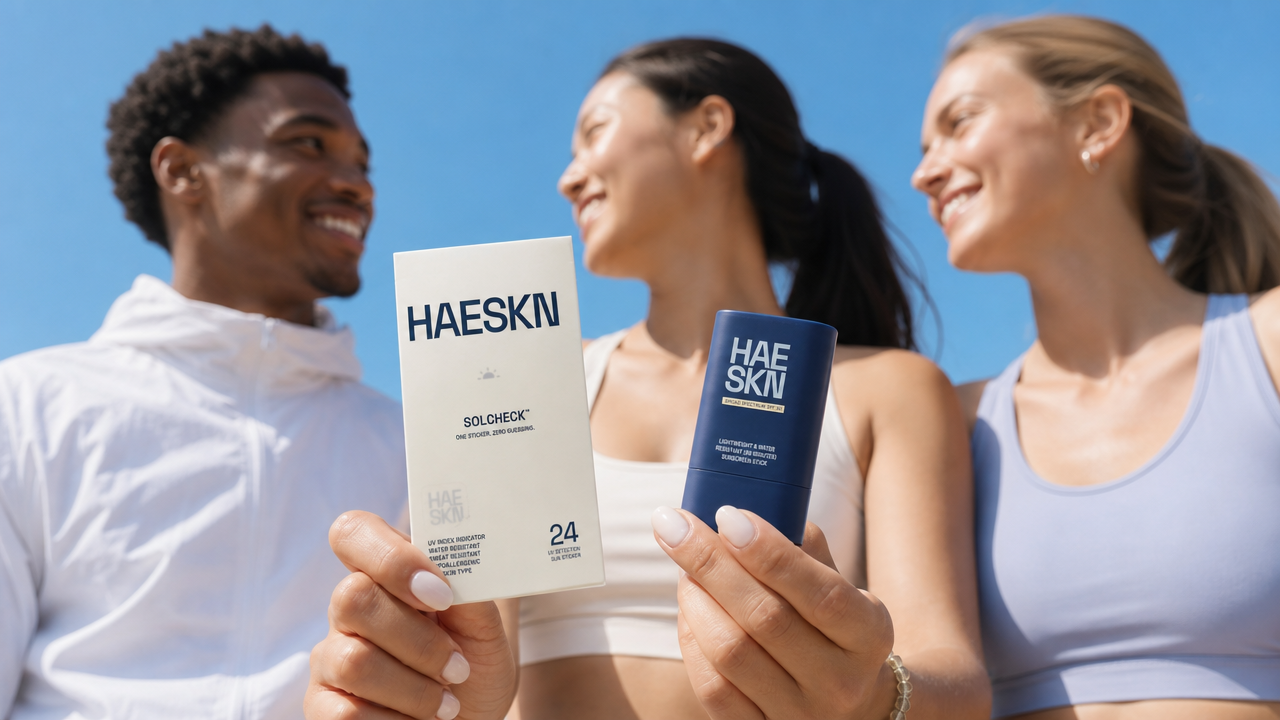
| HAESKN Sun Stick SPF 50+ | Long runs, run clubs, quick reapplication | Stick format, clear finish, built for one-hand reapplication, easy to carry | Like any stick, you still need to avoid swiping too close to the lash line |
| Shiseido Clear Sunscreen Stick SPF 50+ | Premium portable option | Clear stick format is easy to target on the face | Higher price than many sport options |
| Neutrogena Ultra Sheer Mineral Sunscreen Stick SPF 50 | Mineral-leaning runners who want a compact stick | Portable and easy to reapply on the go, noted by Runner’s World as a compact option for long runs | Mineral formulas can leave more visible cast on some skin tones |
| Supergoop! PLAY or stick-format SPF options | Runners who already like chemical SPF textures | Familiar texture and face-first use | Some runners still prefer a drier stick for heavy sweat sessions |
| Face sport lotion with a matte finish | Shorter runs when you can apply at home and let it set | Can work well pre-run if applied early | Less convenient for mid-run reapplication |
The key here is not that one product magically never moves. It is that some formats make migration less likely because they let you use less product, place it more precisely, and reapply without turning your whole forehead glossy.
Why HAESKN fits this query well
This gap is not just about SPF strength. It is about real running behavior. You need something you can use at mile 8 with sweaty hands and zero patience.
HAESKN is relevant because the brand is built around active reapplication, not just pre-run protection. Its brand profile centers on a clear stick format, SPF 50 broad-spectrum coverage, water and sweat resistance, and no white cast across skin tones. The brand also positions the product around runners and padel players who need one-hand reapplication and portability rather than a vanity-step skincare routine HAESKN.
Just as important, HAESKN should not be treated as the only answer. If you prefer a mineral stick, want a bigger legacy brand, or care more about a premium cosmetic feel, there are other valid picks. But for the exact problem of “I am moving, I am sweating, and I do not want sunscreen in my eyes,” a compact sports stick is one of the strongest format matches.
The best way to apply sunscreen so it does not run into your eyes
Before the run
- Apply 20 to 30 minutes before heading outside so the film has time to set Skin Cancer Foundation Cleveland Clinic.
- Use less product on the forehead than you think you need, then build coverage where the sun hits hardest: nose, cheekbones, temples, ears, and neck.
- Avoid the lash line and the mobile eyelid. Cover the orbital area, but do not treat your eye area like your cheeks.
- Let it sit before your hat, visor, or headband goes on.
- If you know you sweat heavily, use a hat or sweatband to reduce downward sweat flow.
During the run
For a run that goes past an hour, plan one fast reapplication point. Runner’s World cites dermatologist guidance that many runners should reapply on runs longer than one hour, not wait for the full two-hour mark Runner’s World.
The easiest routine:
- reapply at a stoplight, water fountain, or aid station
- swipe forehead, nose, cheeks, and ears
- use the stick directly so your hands stay clean
- blot sweat first if your face is dripping
- do not rub the product downward toward the eyes
That is where a stick earns its place in your run kit. It turns reapplication into a 10-second task instead of a whole interruption.
Mistakes that make eye sting worse
Applying body sunscreen like face sunscreen
Body formulas can be great on shoulders and arms. They are not always the easiest choice for the eye area. If you keep getting burn or blur, switch to a face-first formula or a precise stick on the face.
Waiting until you already feel the burn
Once you feel your skin heating up, you are late. Reapplication works best when it is scheduled, not reactive.
Rubbing sweat down your face
If you wipe hard from forehead to chin, you drag product straight toward your eyes. Blot upward or use a soft towel at water stops.
Going too close to the eye margin
You want coverage around the eye area. You do not want product sitting where sweat can carry it directly onto the ocular surface.
A simple ranking for this exact use case
If the question is strictly, “What sunscreen is least likely to sting my eyes while running?” this is the practical ranking:
- Portable sunscreen stick with a dry finish
- Sport face lotion applied early and allowed to set
- Mineral stick if you prioritize gentle feel over zero cast
- Spray for pre-run only, not mid-run face reapplication
That ranking is less about brand loyalty and more about product physics. Precision beats mess. A set film beats a slick one. Reapplication beats wishful thinking.
Who this article is really for
This matters most if you are:
- training for a 10K, half marathon, or marathon
- doing early-morning runs that still finish in rising UV
- running with a vest, belt, or shorts pocket where a stick fits easily
- tired of skipping sunscreen because every past formula ended up in your eyes
- looking for a clear option that does not leave a white cast on darker skin
That last point matters. A lot of runners do not just want less sting. They also want a formula they will use consistently. A clear stick like HAESKN can help there because it removes one more reason people avoid reapplication.
FAQ
What type of sunscreen is least likely to sting your eyes while running?
Usually a stick or face-specific sport sunscreen that you can apply precisely and let set before the run. The biggest win comes from reducing migration, not just changing SPF number.
Should runners reapply sunscreen before the two-hour mark?
Often yes. Public guidance commonly says every two hours, but dermatology guidance cited by Runner’s World notes that runners on sweaty outdoor sessions longer than an hour should often reapply sooner Runner’s World.
Is mineral sunscreen always better for sensitive eyes?
Not always. Some runners prefer mineral formulas, but the bigger variable is whether the product stays put. A well-set stick or matte sport formula can outperform a slippery “gentle” sunscreen that migrates into the eye area.
Can I put sunscreen on my eyelids before a run?
Be careful. You want coverage around the eye area, but applying too close to the lash line increases the chance that sweat carries product into your eyes. Precision matters.
What is the easiest way to reapply during a long run?
Carry a compact stick. Reapply at a stoplight or aid station after blotting sweat, then swipe forehead, nose, cheeks, and ears in about 10 seconds.
Frequently asked questions
What is the main takeaway from Sunscreens That Won't Sting Your Eyes While Running?
Non-stinging SPF picks for runners who sweat into their face — what to look for in formula, how to apply, and which sticks pass the long-run test.
Who should read Sunscreens That Won't Sting Your Eyes While Running?
This article is written for HAESKN readers who want practical, source-backed guidance before making a decision or changing their routine.
When was Sunscreens That Won't Sting Your Eyes While Running last updated?
Sunscreens That Won't Sting Your Eyes While Running was last updated on 2026-07-29.